Finding peace in challenging times

There are moments in history when the noise feels louder than the hope. When headlines carry more heat than light. When it feels like the ground beneath us is unsettled, and the temptation is to either harden our hearts or retreat entirely.

This is one of those moments.

Across our country, deep division and unrest are impossible to ignore. Minnesota has been heavy on my mind lately — another place carrying the weight of anger, grief, and unresolved pain. It’s a reminder that the fractures we feel are not abstract or distant; they are lived, local, and deeply personal. At times, the national mood feels dark, uncertain, and on edge.

And yet — right here in the Triangle — something powerful has been unfolding.

Over the past several days, our community has been part of the Walk for Peace, a remarkable procession of Buddhist monks journeying across the country to promote mindfulness, compassion, and peace. As the monks made their way through our region on their walk from Texas to Washington DC, many beared the cold to witness the monks’ calm determination and hear their words about living with intention and kindness.
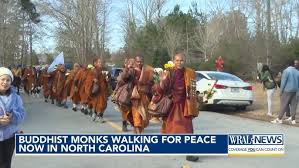
People stood quietly together, often moved to tears, feeling more peace in that moment than they had in weeks. Some held flowers and watched as the monks regifted them — a simple but poignant reminder that peace multiplies when shared.

It’s hard to overstate how meaningful that contrast is.

While parts of our country wrestle with chaos and division, our community chose calm, courage, and connection. The Walk for Peace didn’t deny the pain we carry — it acknowledged it and responded with dignity. It reminded us that peace is not passive. It requires intention. It requires showing up.

As a school leader, this is how I strive to lead every day.

I lead with love and care — always. Not because it’s easy, but because it’s necessary. Schools are microcosms of our society. Every fear, every hope, every fracture eventually walks through our doors. My responsibility is to create spaces where students, faculty, support staff and families feel seen, safe, and valued, even when the world outside feels anything but steady.

Leading with love doesn’t mean ignoring hard truths. It means holding people through them. It means choosing empathy over ego, listening over reacting, and modeling the calm we want young people to carry forward.

Fittingly, today’s vinyl spinning in the background was Bruce Springsteen’s Darkness on the Edge of Town — released in 1978, but somehow always timely. The album is gritty, honest, and unflinching. And tucked within it is “The Promised Land,” the first song on the B side. A song that feels like it was written for moments exactly like this.
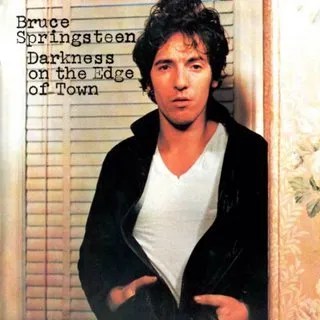
Springsteen sings, “Blow away the dreams that tear you apart / Blow away the dreams that break your heart.” There’s an acknowledgment there: dreams can wound us when they’re deferred, distorted, or denied. We feel that tension now — between what America promises and what it delivers. “The Boss” pushes forward: “I believe in the faith that can save me / I believe in the hope and I pray.” That line lands hard these days. Faith. Hope. Prayer. Not as slogans, but as anchors.

The song closes: “I’m gonna get a little bit of rest tonight.” Even in darkness, there’s permission to pause. To breathe. To gather strength for the work ahead.

That’s what peace looks like right now.

Not pretending everything is fine — but choosing not to let the darkness define us. Walking together when it would be easier to turn away. Leading with love when fear would be more convenient. Teaching our children — by example — that calm is a form of courage.

The Promised Land isn’t a place we arrive at all at once. It’s something we build, step by step, walk by walk, choice by choice.

Even now. Especially now.

Balance and the importance of self-care in our daily lives

Two phrases we hear often in not only education but in the work space as a whole as well as throughout society are balance and self-care. Its so easy to go into rabbit holes of work, work, work, and nothing else if we let it consume us. We always have to be sure we make a valiant attempt to strike the right balance between work productivity, life, self-care and making sure are personal connection needs are met,

One of the things that struck me often, especially before the Covid-19 pandemic completely upended our collective worlds in early 2020, was how “great” I was at maintaining a “work-life balance.” Every day I would cut off from from the outside world almost entirely while at work. As soon as I left for the day a switch seemingly occurred, I was done. Able to focus almost exclusively on friends, family and myself for the rest of the day, weekend, etc. I’m very accessible at work — all stakeholders have my direct number — but it was wide known not to contact me unless an emergency after work hours. I had this down.

As the pandemic rolled along and our lives changed to a work from home model and gradually in person then fully in person throughout the 2020-21 school year, I started to read more about moving away from this “work life balance” model and instead thinking of balance as an ongoing circle. This has been something I’m striving to do, and self-care is woven in.

https://www.bbc.com/worklife/article/20210302-why-work-life-balance-is-not-an-achievement

https://www.fastcompany.com/90641070/work-and-life-arent-opposites-and-balance-is-biased-heres-why

This TED Talk really spoke to me. It was filmed just as vaccines started to rollout in early 2021 and we were about a year into the pandemic. Our lives had totally shifted. How do we focus on building capacity in others? Instead of taking on so many tasks ourselves embrace those around us. Share. Lead by example. Shift. All the adjustments that have been made as school leaders from the beginning of the pandemic, ongoing and throughout — wow. Mind blowing in retrospect. What did we learn? How did we adjust? How are we better? How will we maintain balance going forward?

For me personally, I dedicate time and space 6 days a week for self-care in the form of fitness. 30-90 minutes daily. If I have plans in the evening I’ll get up earlier in the morning and knock it out. Must be a priority. For both my physical fitness and overall well being but also time to completely disconnect from the outside world. Excuses go out the window. Just do it.

I also devote time and space several days a week for friends and family. Uninterrupted and again, disconnected. The personal connection time, no matter how busy we get, it vital. Also is completely focused and connected on the person (or people) not our devices.

Time and space for hobbies for me its been walks 2-3 times a week alone or with a friend enjoying the community, nature, the area and fresh air. Refreshing. Also, listening to music, specifically my love for vinyl a few times a week. Losing self in music can be so beneficial. Blogging, writing and taking time to read a book for pleasure can also give great joy. Find hobbies that bring you joy, relaxation and a brief pause from the day to day grind.

All of these forms of self care are also intertwined in our balance and something that is so beneficial for our overall well being.

https://www.yahoo.com/lifestyle/naomi-osaka-allyson-felix-talk-210616238.html

https://www.health.harvard.edu/blog/self-care-4-ways-nourish-body-soul-2017111612736

https://www.psychologytoday.com/us/blog/click-here-happiness/201812/self-care-12-ways-take-better-care-yourself

We always have ways to stop, pause and reflect. This was an area I struggled with for so long. Now I focus on daily — a priority. All around. Balance. Self-care. Mid-2021 and beyond. How are you doing? Real talk. You are 1 of 1. Limited edition.