In a world of posts, choose presence in the work that matters

Spend a few minutes scrolling any social platform and you will see it. Promotion announcements, milestone celebrations, polished reflections on success. Education is no exception. In many ways it has become part of the rhythm. Do the work, then share the work.

There is value in that. Celebrating students, staff, and community matters.

But I keep coming back to the moments that never make it online.

A quiet conversation with a student who just needed someone to listen.
A teacher staying late because they care, not because anyone will notice.
Families fully engaged in a school event, present with each other instead of documenting it.

Those are the moments that stay with you. Most of them never get posted.

Social platforms are not neutral spaces. They are designed environments. Renowned psychologist Jonathan Haidt (https://jonathanhaidt.com/) has written extensively about how the rise of smartphones and social media, especially since the early 2010s, has reshaped how people experience connection, validation, and even identity. His work points to clear increases in anxiety and depressive symptoms among young people during that same period, trends that closely align with constant access to these platforms and the feedback loops they create.
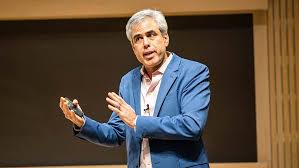
It is not just about students. It is about all of us.

When attention is the currency, behavior adjusts. We share more. We think about how something will be received while we are still experiencing it. We start to measure impact through engagement. At some point it becomes harder to tell the difference between doing meaningful work and being seen doing meaningful work.

NYU professor, renowned podcaster and entrepreneur Scott Galloway (https://scottgalloway.profgmedia.com/) talks about this in a different way. He often points out how digital spaces have amplified status signaling. Success is no longer just something you experience. It is something you present. For many people, especially younger professionals, there is an added pressure to show progress in real time, even when that progress is still unfolding.

You can feel it across every corner of education – schools, district offices, and support areas alike. The quiet expectation to share wins, highlight momentum, and keep the narrative moving forward.

There is nothing inherently wrong with that. But it is worth asking where the line is between sharing and performing.

In schools, the work that matters most is rarely public.

It is relational. It builds over time. It is often invisible to anyone not directly involved.

The strongest leaders and educators I know are not focused on building a personal brand. They are focused on creating conditions where people can do their best work. Supporting staff when no one else sees it. Building trust with families over time. Showing up for students on the days that are not easy.

A lot of the most meaningful work happening across our schools and community would never translate into a post. That is not a gap. That is the point.

There is also a cost to always being on.

When everything becomes something to share, it changes how you experience it. Reflection can turn into reaction. Purpose can slowly shift toward perception. Even in spaces filled with good people doing important work, comparison finds a way in.

Haidt’s research speaks to the impact of those feedback loops on well being. Galloway’s work reinforces how they shape how we define success in the first place.

In education, where the work already asks a lot of you, that tension matters. The work is too important to be driven by optics.

I have been thinking more about what it looks like to be intentional here. To share when it adds value. To celebrate others without making it about myself. To recognize that not every meaningful moment needs to be documented to count.

Through my work in schools, across the community, and in alumni engagement, I have had the opportunity to be part of a lot of meaningful experiences. I am proud of that. At the same time, I am learning that the value of those moments is not determined by how they perform online. It is determined by who they impact and whether that impact lasts.

It might be worth rethinking how we measure leadership.

Not by visibility, but by consistency.
Not by engagement, but by trust.
Not by how often we are seen, but by how often we show up.

Social platforms are not going anywhere. They can be useful and they can build real connection when used with purpose. But the best leaders I know are not focused on being noticed. They are focused on making sure others are.

There is nothing wrong with sharing your work. But not all work needs an audience to be meaningful.

In a space that constantly pulls for attention, there is something steady about choosing impact.

Lead well when no one is watching. That is the part that actually lasts.
The power of maintaining balance through daily unplugging.

Emails, texts, social media. We are plugged in daily throughout our daily lives at work, home and in our lives. It can be and often is — too much. We often spend so much time being connected it can be a challenge to connect effectively with people in person.

I found that no matter how busy the calendar of events is maintaining set time to be disconnected from our devices is not only refreshing but necessary in seeking balance.

I have blogged in the past about my workouts always being device free. (For reference – https://brendanfetters.com/2024/02/18/maintaining-professional-stability-through-daily-balance/) This is one time daily that I know I have disconnected time in place. I hold myself accountable to this daily by keeping my phone not only in another room but on another section of the house.

Being device-free for 60-90 minutes straight most days during this block makes shifting to time and space to read, do chores, etc. completely disconnected easier as well.

In other personal lives it is also vital to have time and space for human connection – device free. I’m not accessing my phone while engaging with friends and/or family — being in the moment distraction free and completely focused on conversation and that human connection.

Completely disconnecting is sometimes a challenge but this recent article in The New York Times offers several outstanding tips and tricks around common situations that require us to be connected in some capacity — to have a healthy relationship with our devices. I highly recommend giving it a read —

Disconnecting is powerful in our 24/7 “on” lives but it takes effort. The rewards are powerful. This is something I’m continuing to grow within myself as there is always room for improvement within ourselves, right?

Navigating social media during challenging times and lessons learned from a pause in usage

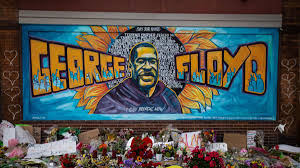
In the months since I last blogged our collective lives have changed even more. COVID-19 remains with us and without a vaccine continues to alter our worlds. In the wake of the recent deaths of George Floyd and Brianna Taylor on top of years of racial inequities outrage sparked nationwide and even globally. These events have resulted in rapid idealogical shifts along with much needed conversations and in many cases action to lead toward real movements to confront these inequalities all across the nation. By far the positives of people trying their best to become better allies, supporters and friends while deepening overall understanding, learning and growing within the ongoing work was evident throughout social media.

download-1

https://sports.yahoo.com/a-changed-world-mlb-managers-explain-how-they-are-leading-clubhouses-after-george-floyd-coronavirus-003336144.html

https://www.cnbc.com/2020/06/11/ceos-unveil-plans-against-racial-inequality-after-george-floyd-death.html

https://www.cnn.com/2020/06/16/world/meanwhile-in-america-june-12-intl/index.html

https://www.wral.com/books-for-kids-to-help-spark-conversations-about-race-justice/19128212/

https://www.cnn.com/2020/06/13/us/changes-from-protests-george-floyd-trnd/index.html

We all are living in very anxious times during these times of such uncertainty. Since the pandemic rocked the world in March our lives have drastically shifted. We’ve had to collectively shift our day to day lives as we all navigate living with a global pandemic.

images

When will there be a vaccine? How and when will large in person concerts and sporting events return? What about schools? When will we have more normalcy in our world? So many questions. So much unpredictability. Social media can assist with the pandemic at local, state, federal and global level when reliable information/sources are utilized.

https://www.cdc.gov/coronavirus/2019-ncov/daily-life-coping/managing-stress-anxiety.html

Social media is a great and powerful tool. It’s been a significant part of my life for well over a decade, especially Twitter. I joined the platform nearly a decade ago and had so much impact on my life even once blogged about my entry into the Twitterverse.

I’ve always operated all social media platforms under the mindset of using Facebook and Twitter for good. During these often unstable times this is especially true.

However far too often we see users not abiding by this. Actively complaining, engaging in unhealthy/productive conversations and not abiding by social media etiquette best practices. What value is added by utilizing social media platforms in such a way?

The above mentioned activity became so toxic recently in my own social media circle that I voluntarily cut out all social media for over a week. Logged off my laptop, desktop, all iOS social media apps. Done. Didn’t think about it for over a week. Life went on. The break from the negative energy was refreshing, honestly. I had so much more of my day left. I lived my life completely removed from the social media bubble. After a week plus away I was rejuvenated.

Below are some sound resources on social media best practices.

https://www.houstonpress.com/news/4-rules-of-twitter-etiquette-to-follow-immediately-11271695

https://wlstraininginc.com/social-media-etiquette/

https://www.huffpost.com/entry/10-facebook-etiquette-rul_b_9425740

https://topdogsocialmedia.com/twitter-etiquette/

download

We are living in very trying times as a society. We all deal with stress in a variety of ways. Be mindful of who and what you represent. Your words matter. Pause and reflect before you post.